Mules and donkeys in global history: neglected animal technologies.

Abstract
Donkeys and horses were crossbred from c2000 BCE to make mules. Due to hybrid vigour, mules were stronger, longer-lived, healthier, more frugal, better in heat, and more intelligent than horses, with hooves adapted to rocky terrain. And they were larger, stronger, and better in cold and wet climates than donkeys. However, mules were sterile, costly, stubborn, cautious, slow, and hard to saddle.
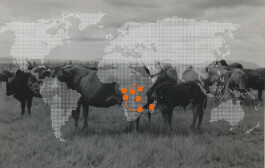
Mules dominated logistics in the Chinese, Persian, Ethiopian, Roman, Spanish, and French empires, plied ‘silk roads’ out of SW China, and flourished in Brazil and the USA after independence. However, they were rare, or absent, in Japan, the steppes, N Europe, Australasia, and much of SE Asia, India, and Sub-Saharan Africa. Confucians celebrated crossbreeding as mastery over nature, and Christians allowed it. In contrast, Hindus abhorred mating a base donkey with a noble horse, Jews banned all hybrids, and Islam prohibited or discouraged mule-breeding. Disease was a barrier across much of Africa.
Expensive donkeys for mule-breeding came from N China and the Mediterranean. Exports of mules were initially from N China and S France; later from the Llanos and Pampas of Hispanic America; and even later from the ‘Upper South’ of the USA.
Bio
William Gervase Clarence-Smith is Emeritus Professor of History at SOAS University of London, former chief editor of the Journal of Global History (published by Cambridge University Press), and former coordinator of the Commodities of Empire research project (backed by the British Academy). He has published on the history of various animals around the world, for example on equids in the Indian Ocean, and on the global spread of the disease Trypanosoma evansi (surra) among equids and camels. He is currently researching a global history of mules.