Archival research and fieldwork in Angola
Paulo Matos (PhD candidate, CATTLEFRONTIERS Project)
Between 15 March and 10 April 2025, I travelled to Angola to begin my archival research and fieldwork.
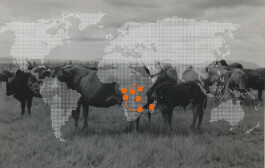
The objectives of the trip were threefold: to access the historical archives under the custody of the Angolan National Archives (ANA); to develop a network by contacting local scholars and experts working on pastoralism and colonialism; and to visit the pastoralist regions and meet local herders. Over the course of four weeks, I visited eight towns across Angola, travelling from the capital, Luanda, to the south-western region, via Lubango, Ondjiva, Moçâmedes, Virei, Namacunde, Oihole, and Xangongo, crossing approximately 2.800 kilometres through the countryside.
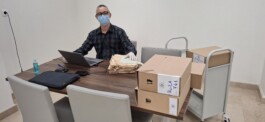
During the first week, I visited the Angolan National Archives (ANA), where I met the Director of the institution, Dr Fidel Raul Carmo Reis, and accessed relevant archived documents referring to the pastoralist societies. Over the following weeks, I travelled through the country, establishing contacts with scholars from the Higher Institute of Educational Sciences of Huíla (ISCED-Huíla/Lubango), the University Mandume ya Ndemufayo (Lubango), and the Polytechnic Institute Mandume ya Ndemufayo (Ondjiva). I also contacted experts in pastoralism and cattle commerce in various regions, as well as local traditional authorities from Humbe, Ombadja and Kwanhama.
The first archival research and fieldwork trip to Angola yielded many valuable insights. In Luanda, the impressive volume of documents archived in ANA calls for better planning when it comes to accessing and analysing them. In the vast southwest, flexible planning is needed to account for the large distances between the cities and the 'kimbos', which are living places commonly situated several kilometres outside cities where pastoralists keep and handle their cattle. Another relevant consideration is openness to diverse possibilities and opportunities: while it is easier to schedule meetings and follow a timetable in Luanda and other large towns, this is not the case in the southwest. Some contacts made in advance may alter meeting dates, and new important contacts may emerge during conversations and explorations on the ground.