
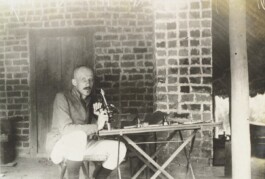


This project traces the development of veterinary science in Africa, examining how knowledge was produced, circulated, and contested within both colonial and postcolonial contexts. In the era of colonial expansion, European powers sought to reshape Africa’s livestock, believing that the health and constitution of cattle could be “improved” through modern science. Criticising the practices of African pastoralists and the perceived inferiority of their cattle breeds, colonial veterinary experts introduced new forms of disease management, including mass vaccination campaigns, quarantines, and culling. These interventions, aimed at controlling deadly diseases, often sparked resistance and adaptation from African herders, whose knowledge and customs were often sidelined in favour of foreign methods.
At the same time, colonial authorities imported cattle from distant lands, hoping to create more productive herds through crossbreeding with local animals. However, these efforts met with mixed success, as issues of acclimatisation, vulnerability to tropical diseases, and reluctance from local communities complicated their plans. Despite these challenges, European veterinary knowledge and technologies continued to spread, institutionalised in colonial departments, schools, research institutes, and international organisations like the FAO and the Office International des Epizooties.
The focus of this project is the fight against African Animal Trypanosomiasis (AAT) in the Belgian Congo, Ruanda, and Burundi from the 1890s to the 1970s. AAT, an often deadly disease spread by the tsetse fly, severely hindered cattle production in these regions. Various strategies – including tsetse eradication, the introduction of disease-resistant breeds, and the use of drugs – were employed to combat this scourge. In this project it is explored how these interventions were shaped not only by European veterinarians but also by African knowledge systems, as well as by broader transimperial and international collaborations in veterinary science.

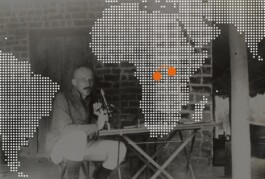

This project traces the development of veterinary science in Africa, examining how knowledge was produced, circulated, and contested within both colonial and postcolonial contexts. In the era of colonial expansion, European powers sought to reshape Africa’s livestock, believing that the health and constitution of cattle could be “improved” through modern science. Criticising the practices of African pastoralists and the perceived inferiority of their cattle breeds, colonial veterinary experts introduced new forms of disease management, including mass vaccination campaigns, quarantines, and culling. These interventions, aimed at controlling deadly diseases, often sparked resistance and adaptation from African herders, whose knowledge and customs were often sidelined in favour of foreign methods.
At the same time, colonial authorities imported cattle from distant lands, hoping to create more productive herds through crossbreeding with local animals. However, these efforts met with mixed success, as issues of acclimatisation, vulnerability to tropical diseases, and reluctance from local communities complicated their plans. Despite these challenges, European veterinary knowledge and technologies continued to spread, institutionalised in colonial departments, schools, research institutes, and international organisations like the FAO and the Office International des Epizooties.
The focus of this project is the fight against African Animal Trypanosomiasis (AAT) in the Belgian Congo, Ruanda, and Burundi from the 1890s to the 1970s. AAT, an often deadly disease spread by the tsetse fly, severely hindered cattle production in these regions. Various strategies – including tsetse eradication, the introduction of disease-resistant breeds, and the use of drugs – were employed to combat this scourge. In this project it is explored how these interventions were shaped not only by European veterinarians but also by African knowledge systems, as well as by broader transimperial and international collaborations in veterinary science.


This website is part of and supported by the ERC Starting Grant CATTLEFRONTIERS, Grant No. 101076565 funded by the European Union.
Views and opinions expressed are however those of the author(s) only and do not necessarily reflect those of the European Union or the European Research Council Executive Agency. Neither the European Union nor the granting authority can be held responsible for them.
This website is created by: Kasper Jacek, using Lay Theme, Lora by Cyreal & Archivo Black by Omnibus-Type, licensed under Open Font License.
If nothing else is stated all material on this website is owned by the CATTLEFRONTIERS. Any archival material is used with the permission of the archives. For a complete list of copyrights for the archival material used on this website see Copyright – please contact us for permission to use any of the material on this website.
We don't store any personal data on this website.


This website is part of and supported by the ERC Starting Grant CATTLEFRONTIERS, Grant No. 101076565 funded by the European Union.
Views and opinions expressed are however those of the author(s) only and do not necessarily reflect those of the European Union or the European Research Council Executive Agency. Neither the European Union nor the granting authority can be held responsible for them.
This website is created by: Kasper Jacek, using Lay Theme, Lora by Cyreal & Archivo Black by Omnibus-Type, licensed under Open Font License.
We don't collect any personal data on this website.