
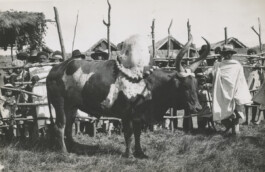


Combining the analytical lenses of all four thematic frontiers (biological, mental, socio-ecological and commercial) that make up the CATTLEFRONTIERS project, this study analyses the transformation of cattle production in Madagascar from the late precolonial to early postcolonial period (1870s-1970s). It examines why, how and to what effect European (mostly but not only French) and Malagasy administrators, entrepreneurs and veterinary experts, in often conflictual interaction with indigenous pastoralists, tried to transform pre-existing cattle economies on the island and to turn cattle into profitable commodities. This project shows that the making of such a capitalist-colonial cattle frontier implied a broad range of interventions, from the improvement of local breeds and new methods of cattle disease management to the submission and taxation of cattle pastoralists and the establishment of meat factories and new cattle/commodity trading networks.
While some of them already began under Merina rule, these interventions intensified much under French colonialism and effectively turned the island into one of colonial Africa’s main producers and exporters of cattle commodities, most notably hides and canned/frozen beef. However, Madagascar never became the “new Argentina” some had hoped for. The project shows how the manifold tensions, conflicts and negotiation processes underwriting the processes of frontier-making as well as the (intended and unintended) social, economic and ecological consequences limited the scope of Madagascar’s cattle industry, eventually also leading to its gradual disconnection from regional, imperial and global markets. This book-length study will be the first one unpacking the making and unmaking of this paradigmatic cattle frontier. It will also play a pivotal and synthesising role within CATTLEFRONTIERS, as it will integrate and feed back into key conceptual and empirical insights from the other case studies.


Combining the analytical lenses of all four thematic frontiers (biological, mental, socio-ecological and commercial) that make up the CATTLEFRONTIERS project, this study analyses the transformation of cattle production in Madagascar from the late precolonial to early postcolonial period (1870s-1970s). It examines why, how and to what effect European (mostly but not only French) and Malagasy administrators, entrepreneurs and veterinary experts, in often conflictual interaction with indigenous pastoralists, tried to transform pre-existing cattle economies on the island and to turn cattle into profitable commodities. This project shows that the making of such a capitalist-colonial cattle frontier implied a broad range of interventions, from the improvement of local breeds and new methods of cattle disease management to the submission and taxation of cattle pastoralists and the establishment of meat factories and new cattle/commodity trading networks.
While some of them already began under Merina rule, these interventions intensified much under French colonialism and effectively turned the island into one of colonial Africa’s main producers and exporters of cattle commodities, most notably hides and canned/frozen beef. However, Madagascar never became the “new Argentina” some had hoped for. The project shows how the manifold tensions, conflicts and negotiation processes underwriting the processes of frontier-making as well as the (intended and unintended) social, economic and ecological consequences limited the scope of Madagascar’s cattle industry, eventually also leading to its gradual disconnection from regional, imperial and global markets. This book-length study will be the first one unpacking the making and unmaking of this paradigmatic cattle frontier. It will also play a pivotal and synthesising role within CATTLEFRONTIERS, as it will integrate and feed back into key conceptual and empirical insights from the other case studies.


This website is part of and supported by the ERC Starting Grant CATTLEFRONTIERS, Grant No. 101076565 funded by the European Union.
Views and opinions expressed are however those of the author(s) only and do not necessarily reflect those of the European Union or the European Research Council Executive Agency. Neither the European Union nor the granting authority can be held responsible for them.
This website is created by: Kasper Jacek, using Lay Theme, Lora by Cyreal & Archivo Black by Omnibus-Type, licensed under Open Font License.
If nothing else is stated all material on this website is owned by the CATTLEFRONTIERS. Any archival material is used with the permission of the archives. For a complete list of copyrights for the archival material used on this website see Copyright – please contact us for permission to use any of the material on this website.
We don't store any personal data on this website.


This website is part of and supported by the ERC Starting Grant CATTLEFRONTIERS, Grant No. 101076565 funded by the European Union.
Views and opinions expressed are however those of the author(s) only and do not necessarily reflect those of the European Union or the European Research Council Executive Agency. Neither the European Union nor the granting authority can be held responsible for them.
This website is created by: Kasper Jacek, using Lay Theme, Lora by Cyreal & Archivo Black by Omnibus-Type, licensed under Open Font License.
We don't collect any personal data on this website.