
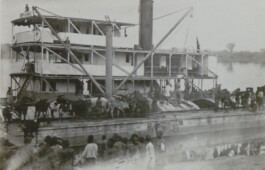


"Supplying Brazzaville and Kinshasa 1920 to 1970" examines the trade routes, sales points, and consumption patterns of cattle commodity during the colonial period and up until the 1970s. Through an analysis of administrative and private archives, including those from trading, transportation, and refrigeration companies, I trace the legislative framework governing this trade, particularly focusing on pricing and hygiene standards. I highlight the imperial and even trans-imperial flows of meat and hides aimed at urban markets of both colonies, which were experiencing significant demographical growth at the time. The commercialisation of meat also encompasses a history of merchants, ranging from Belgian wholesalers to street vendors.
Furthermore, I intend to conduct oral history in the Democratic Republic of the Congo (DRC) and the Republic of Congo to enable a deeper exploration of the practices surrounding the preparation and consumption of cattle commodities, as well as the representations associated with them. Comparing the two colonies allows for a distinction between varied forms of administrative management and capitalist investment, while also enriching the study of material contacts and the interdependence of the two border cities.

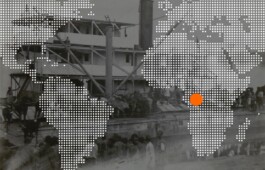

"Supplying Brazzaville and Kinshasa 1920 to 1970" examines the trade routes, sales points, and consumption patterns of cattle commodity during the colonial period and up until the 1970s. Through an analysis of administrative and private archives, including those from trading, transportation, and refrigeration companies, I trace the legislative framework governing this trade, particularly focusing on pricing and hygiene standards. I highlight the imperial and even trans-imperial flows of meat and hides aimed at urban markets of both colonies, which were experiencing significant demographical growth at the time. The commercialisation of meat also encompasses a history of merchants, ranging from Belgian wholesalers to street vendors.
Furthermore, I intend to conduct oral history in the Democratic Republic of the Congo (DRC) and the Republic of Congo to enable a deeper exploration of the practices surrounding the preparation and consumption of cattle commodities, as well as the representations associated with them. Comparing the two colonies allows for a distinction between varied forms of administrative management and capitalist investment, while also enriching the study of material contacts and the interdependence of the two border cities.


This website is part of and supported by the ERC Starting Grant CATTLEFRONTIERS, Grant No. 101076565 funded by the European Union.
Views and opinions expressed are however those of the author(s) only and do not necessarily reflect those of the European Union or the European Research Council Executive Agency. Neither the European Union nor the granting authority can be held responsible for them.
This website is created by: Kasper Jacek, using Lay Theme, Lora by Cyreal & Archivo Black by Omnibus-Type, licensed under Open Font License.
If nothing else is stated all material on this website is owned by the CATTLEFRONTIERS. Any archival material is used with the permission of the archives. For a complete list of copyrights for the archival material used on this website see Copyright – please contact us for permission to use any of the material on this website.
We don't store any personal data on this website.


This website is part of and supported by the ERC Starting Grant CATTLEFRONTIERS, Grant No. 101076565 funded by the European Union.
Views and opinions expressed are however those of the author(s) only and do not necessarily reflect those of the European Union or the European Research Council Executive Agency. Neither the European Union nor the granting authority can be held responsible for them.
This website is created by: Kasper Jacek, using Lay Theme, Lora by Cyreal & Archivo Black by Omnibus-Type, licensed under Open Font License.
We don't collect any personal data on this website.